M A X

We work with contemporary architectural forms shaped by the contextual forces of a site. We extract hidden local value and transform it into narrative-driven identity.


How it works

Context

Evidence-Based Design

We rely on contextual analysis and data-driven research to inform architectural decisions. Design strategies emerge from measured environmental, spatial, and regulatory conditions, not assumptions.

Project
History

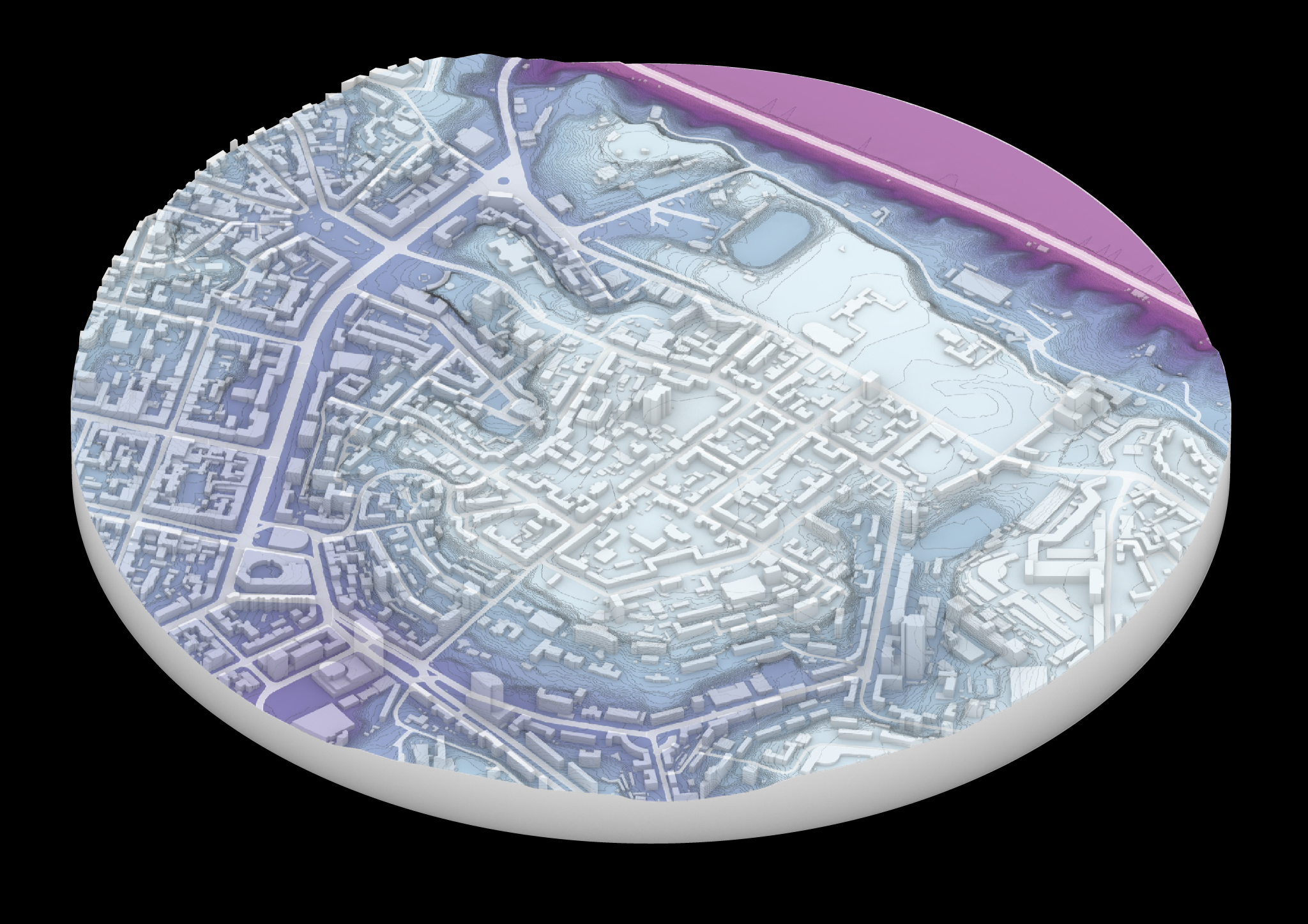
Throughout its history, the neighbourhood of Lypky District in Kyiv has been a showcase for the city’s latest progress and achievements. First, the Mariinsky Palace was built there, followed by the Skyscraper of Hinsburg — the first in Ukraine — as well as the largest circus in Europe. Following World War II, which left a significant portion of buildings in Kyiv’s city centre in ruins, a new building was erected — at the time the tallest in the city and the home of Ukraine’s Cabinet of Ministers.
Monuments

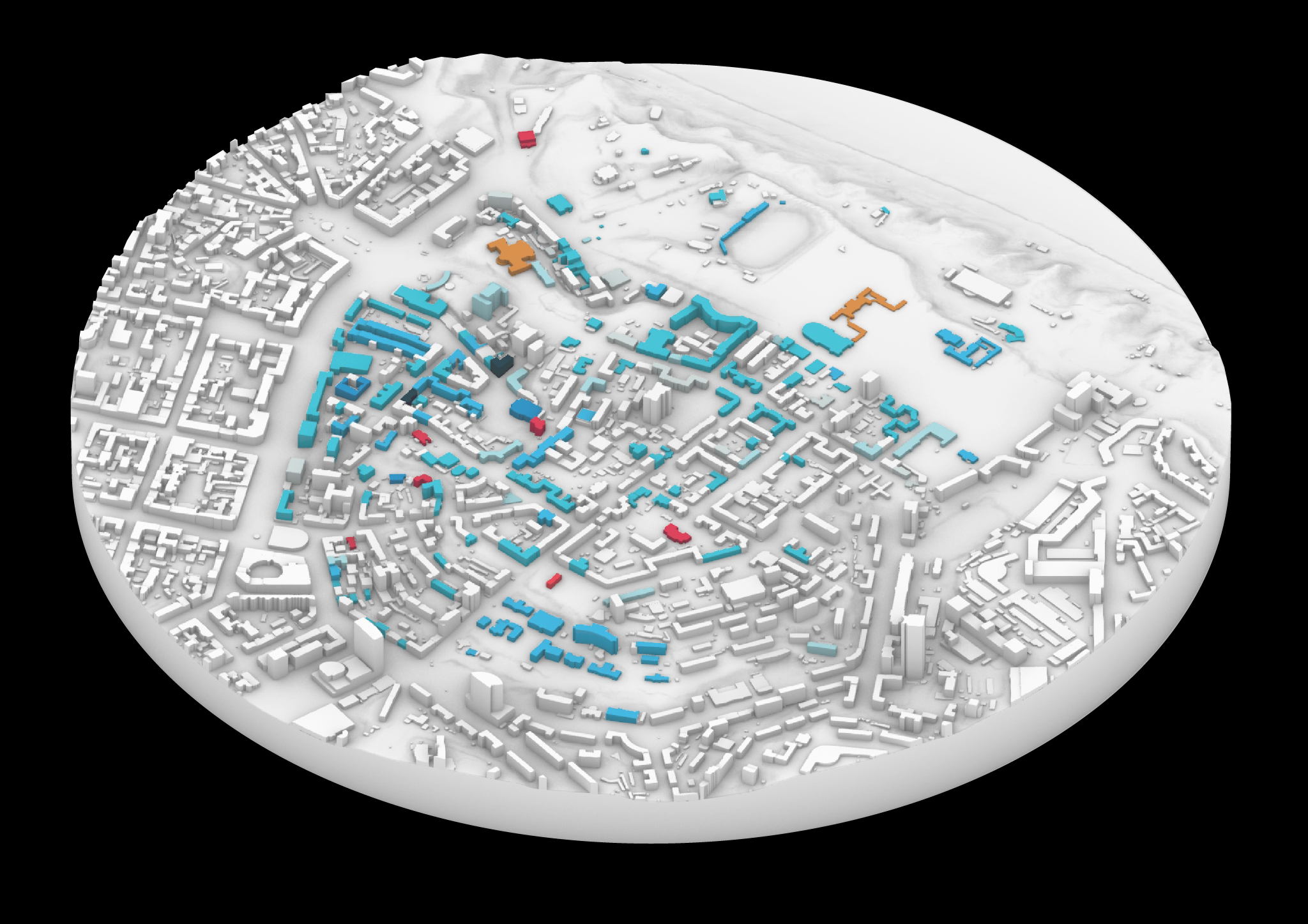
Here we can see many preserved buildings of architectural or historical importance. The majority of those can be found between Khreshchatyk and Lypska streets. The area also has a few architectural monuments of national significance, with the House of Horodentskyi on Bankova Vulytsia, among others.
Age of Buildings

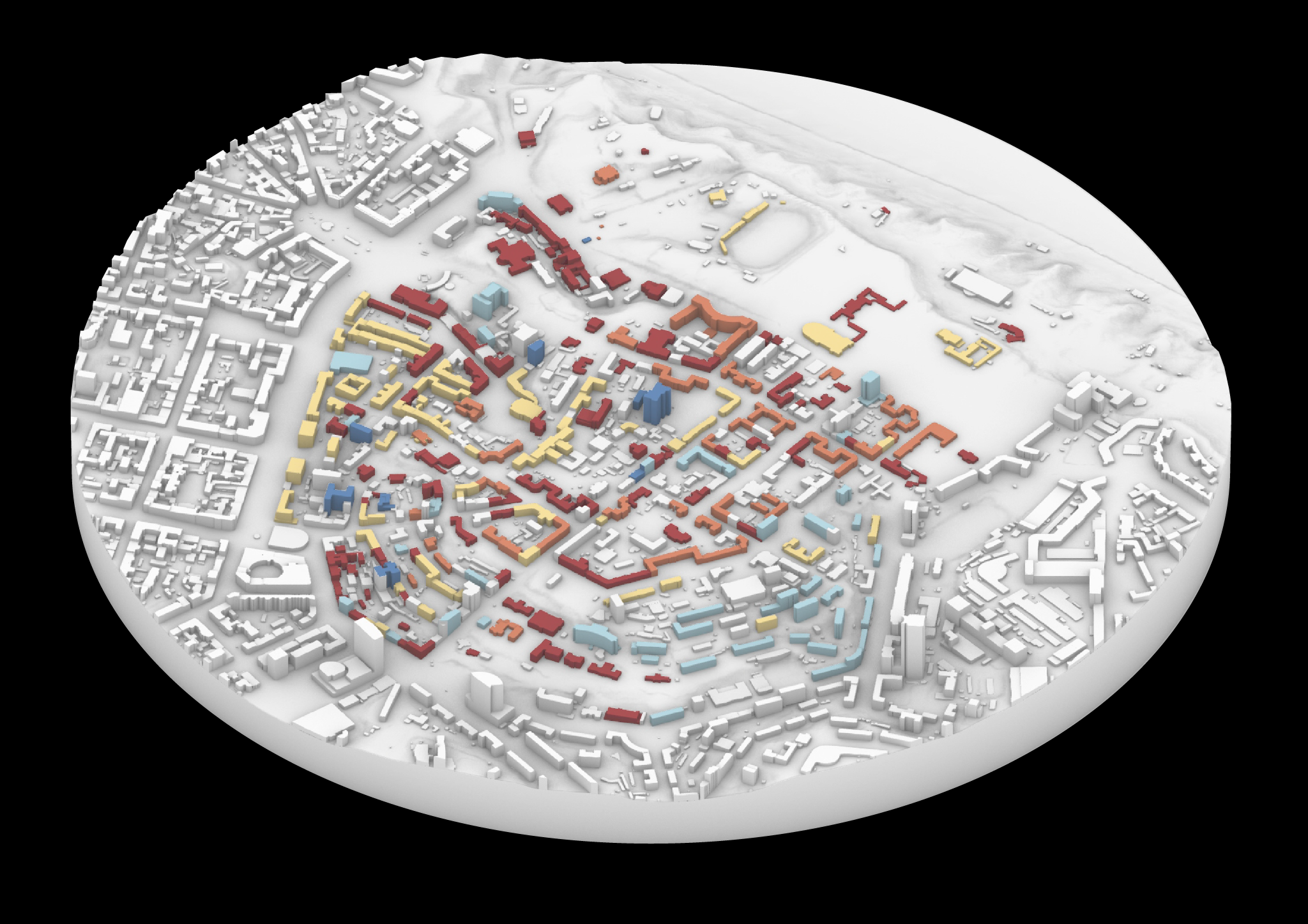
Most current buildings in Lypky were built until the middle of the 20th century. Later, only minor additions were made to already formed blocks. One exception are the developments of 1960-80s East of the Alexander Clinical Hospital on the slopes of Mechnykova Vulytsia. The latter was the last addition to the current face of Lypky, which has evolved very little through the years of Ukraine’s independence.
Floors Function

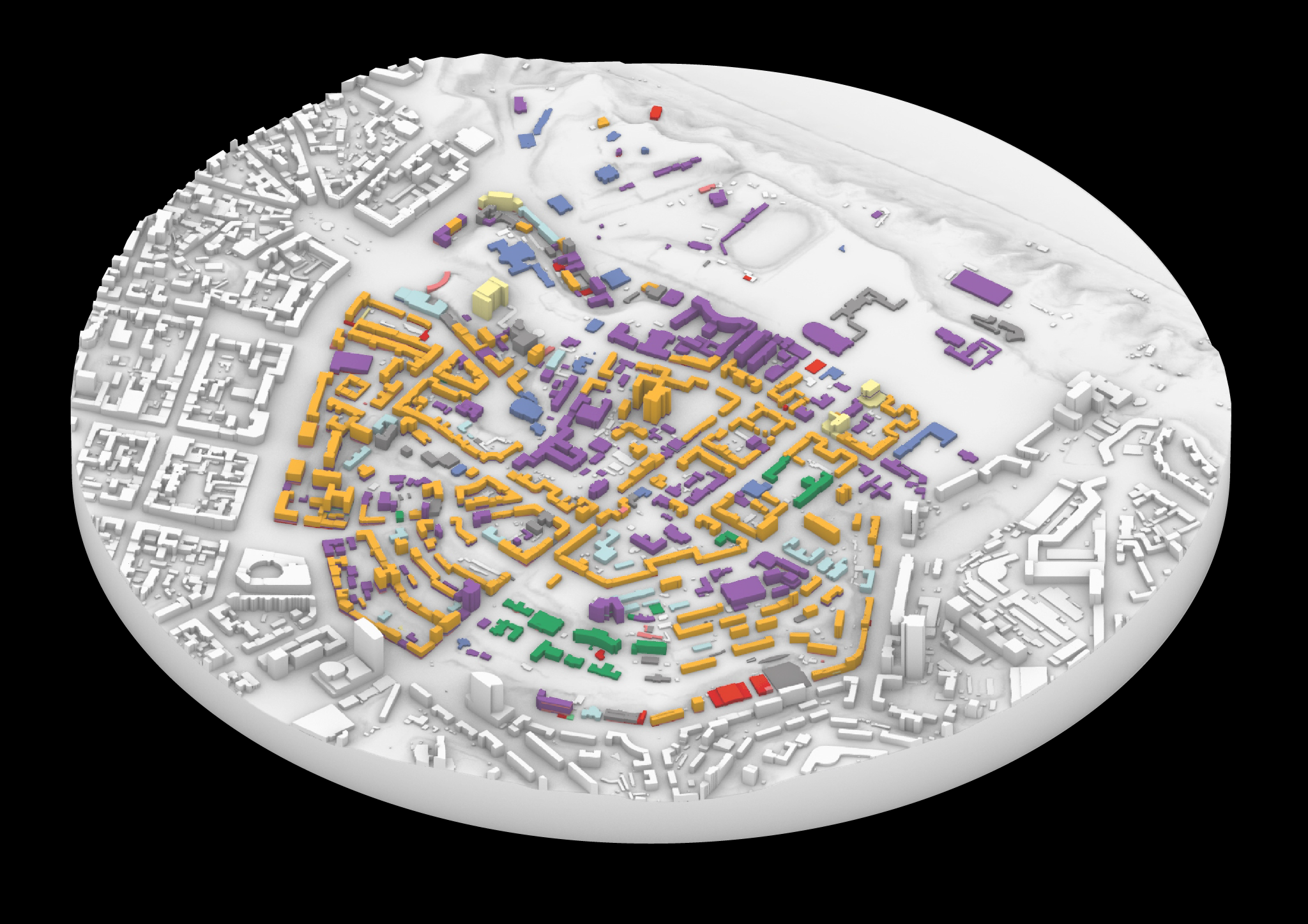
While residential buildings prevail in Lypky, office buildings still occupy one third of its total square metre area. Approximate numbers show that the neighborhood is home for 35,000 residents and an workplace for 64,000 workers. Offices here are concentrated in the centre part of the neighbourhood, which severely limits possibilities for public realm use. These few blocks do not form part of the daily routine of the residents; instead, everyday life is concentrated across the perimeter.
Green Network

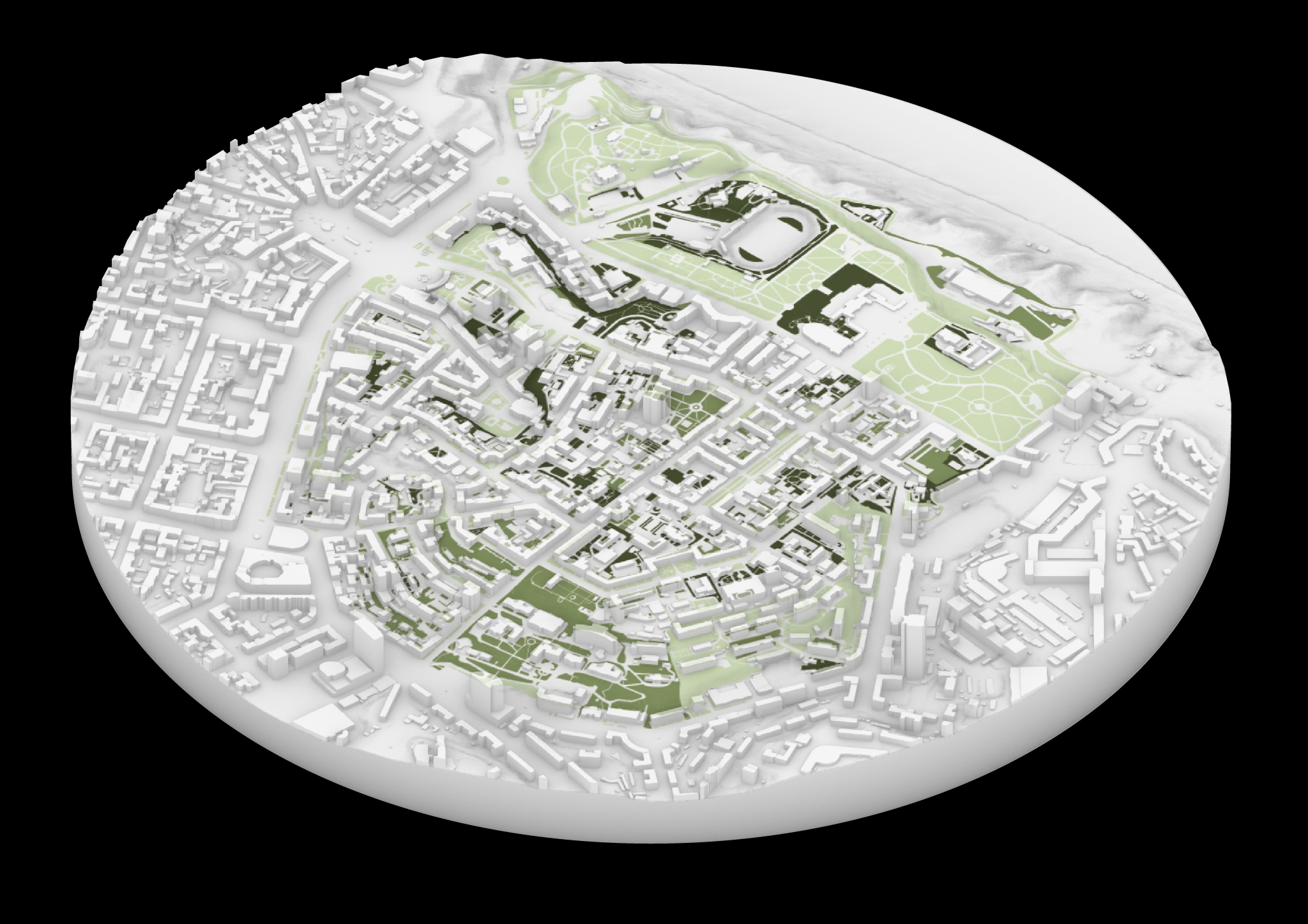
There are several green spaces in Lypsky, Mariinsky Park being the most significant. We can also find Bohomolets park, a portion of Ivana Franka square, and the square across the Kozlovskoho Provulok. Lypska and Bohomoltsya streets are also covered with lush urban greenery. However, these green zones are not connected as green networks, belts, or corridors. The perimeter of Lypky, with the highest concentration of pedestrians and vehicles, is sparsely green.
Mobility

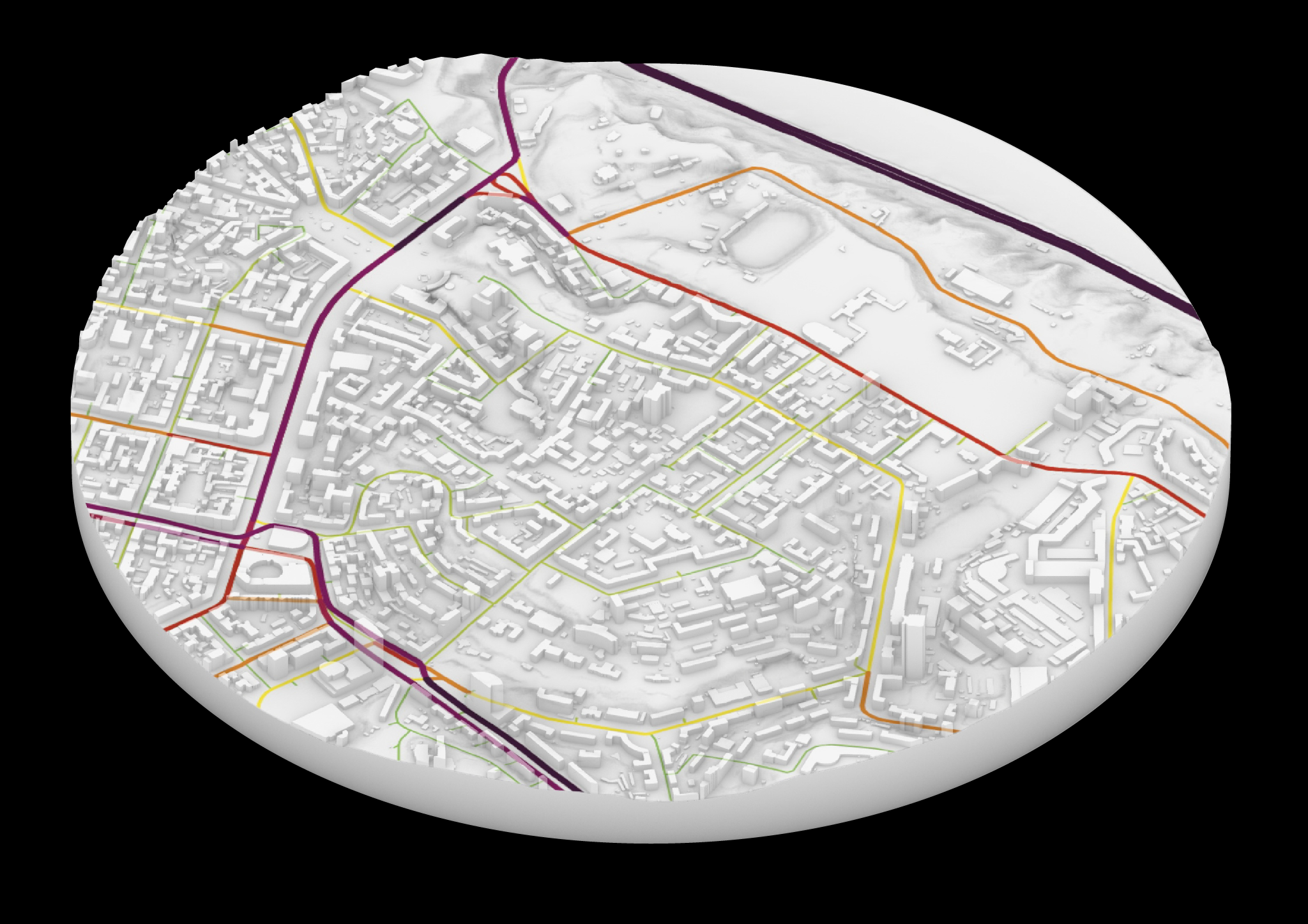
The Lypky neighbourhood is situated in the centre of Kyiv. This is where all major car traffic corridors are; specifically the Basseyna, Hrushevskogo, Khraschatyk, and Parkova doroha streets. Despite this, car traffic density remains low inside the Lypky area. The street network, which was designed to be car-centric, is not used extensively.
Goal

Schematic Design

We develop schematic designs that translate research and analysis into spatial concepts. Layouts and program are shaped to best meet user needs while being fully integrated with the future architecture.

Project

Starting point

We started a project to restore the Hostynyi Dvir in Kyiv with the Ministry of Culture and Information Policy. Our research group explored Kontraktova Ploscha and Hostynyi Dvir, conduct a survey of Kyivans and residents of Podil, and analyze traffic and human flows.

Seminar

We held a project seminar, where restorers, architects, urban planners, historians, cultural managers, the public, and members of parliament developed a step-by-step roadmap for the restoration and development of the Hostynyi Dvir.

Content

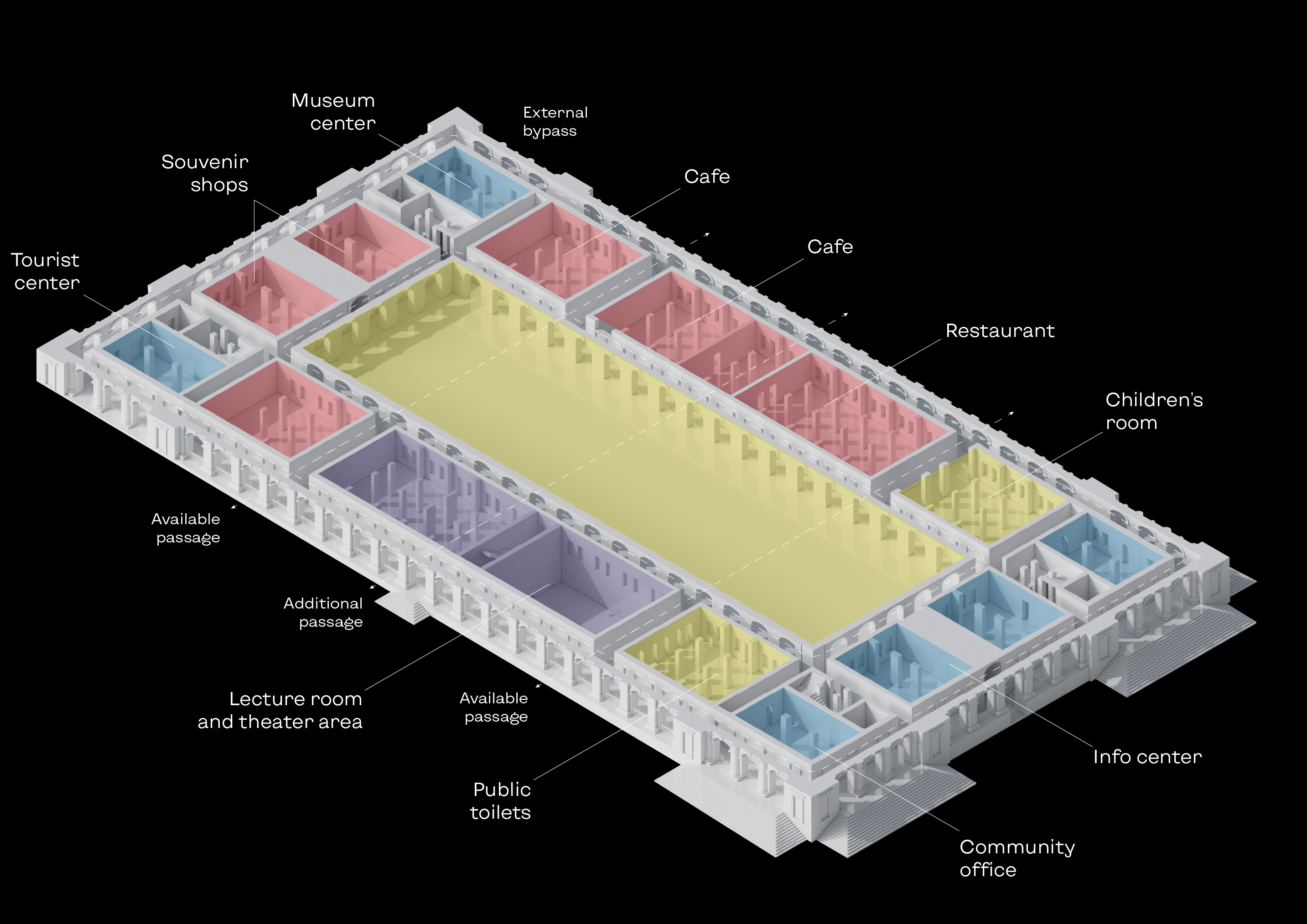
Based on the results of sociological research and examples of the development of similar buildings in other countries, the seminar participants suggest what functions the building can be filled with.

Presentation

On December 17, 2021, the results of the seminar on the future of the Hostynyi Dvir were presented cooperatively with the Ministry of Culture and Information Policy of Ukraine and Oleksandr Tkachenko.

Idea

Extracted Value

We unlock the potential embedded in a site’s topography, climate, constraints, and context, turning limitations into spatial and programmatic advantages rather than added volume or formal gestures.

Project

Challenge

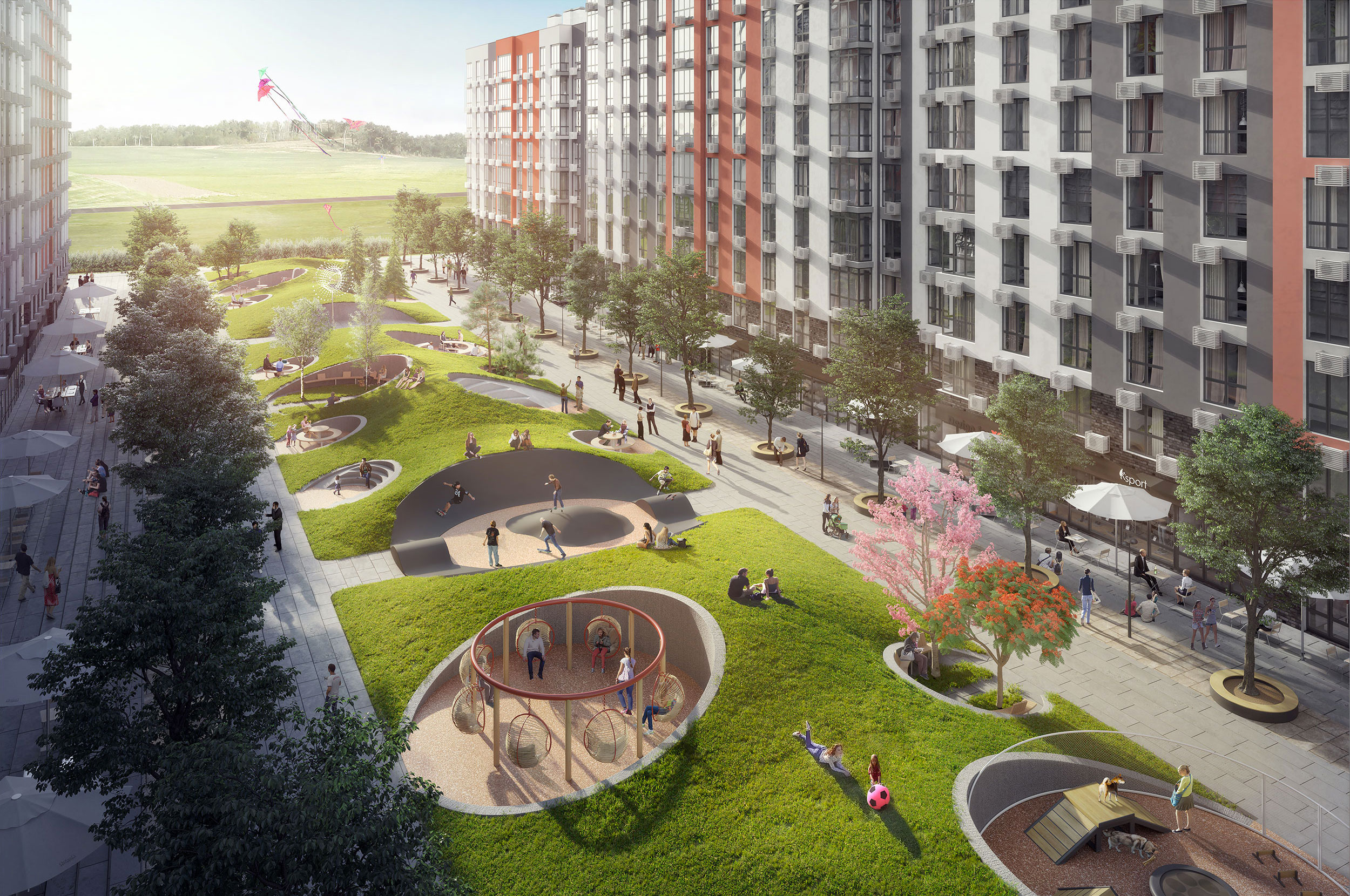
The residential complex is being built in the middle of a field outside Odesa city. To determine the potential problems that may arise for those planning to live in it, we interviewed the residents of a nearby, already-built complex. We found that the primary issue is the lack of public activities and conflicts between residents, as they do not have sufficient public spaces to spend their free time.

Task

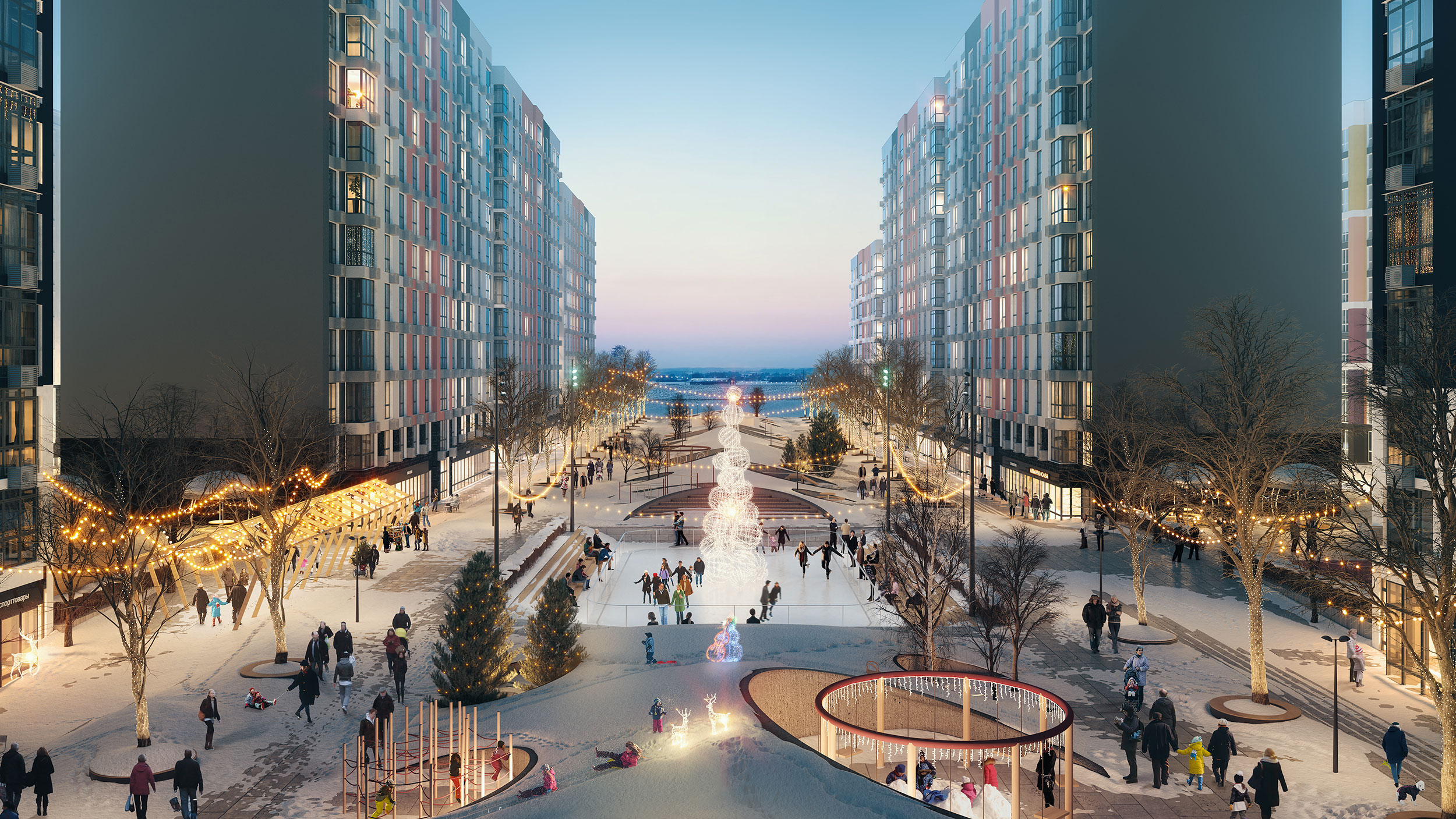
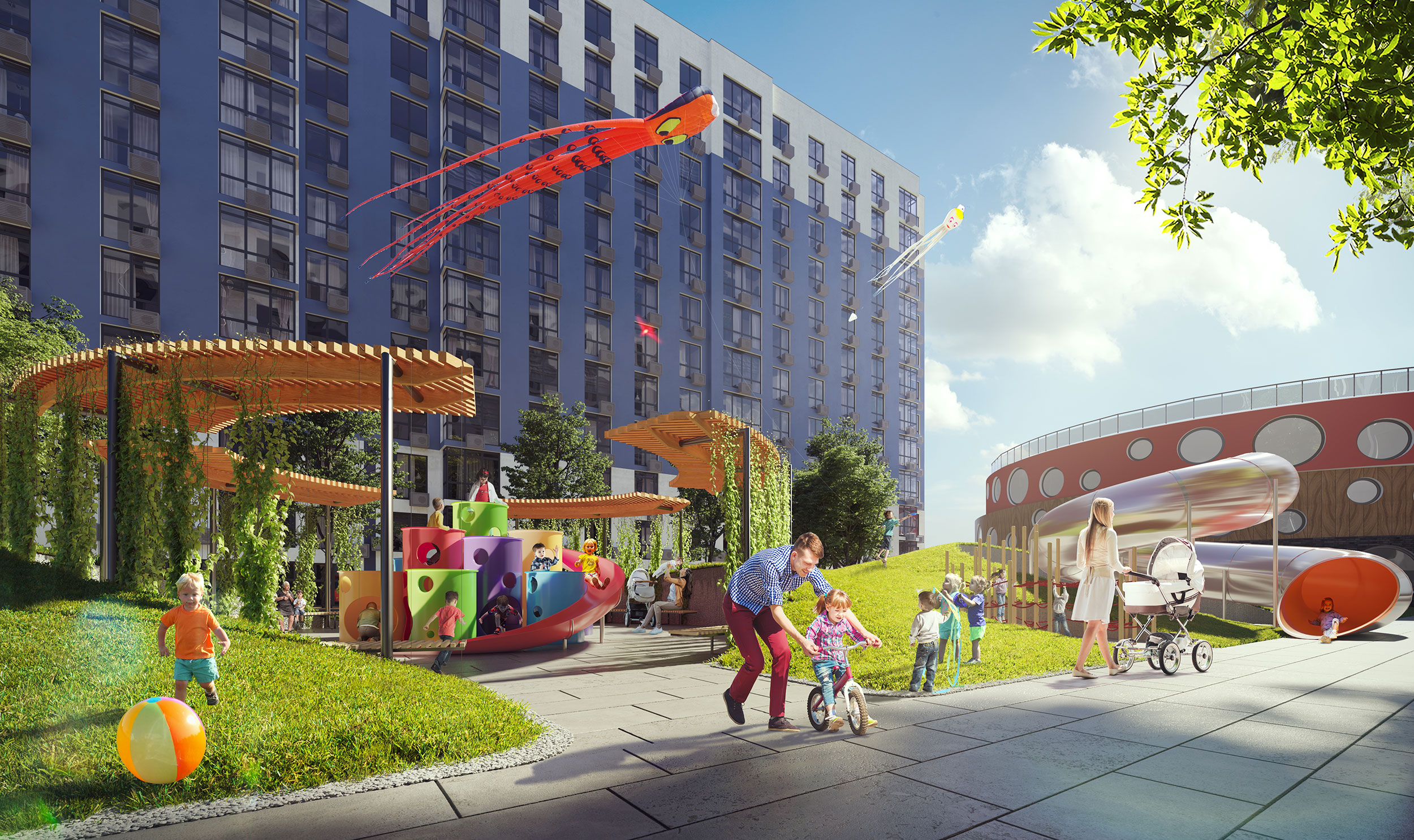
We set ourselves the task of developing as many various activities as possible and arranging a distinct space for each of them to prevent conflict between residents. The project concept came from the slope between the houses, which makes the space in the middle of a monotonous field more enjoyable.

Activities

We filled the slopes with cylindrical spaces designed for different activities. Each activity was positioned within one circle, thereby solving the problem of conflict between multiple groups of residents. The space was distributed so that there were activities of different functions and loudness on each slope. Residents can modify the zoning during the complex construction depending on their needs.

Concept

Distinct Identity

We create distinct architectural identities that directly emerge from program and spatial logic.
This clarity translates into real user benefits — intuitive navigation, comfort, and a strong sense of place.

Project

Context

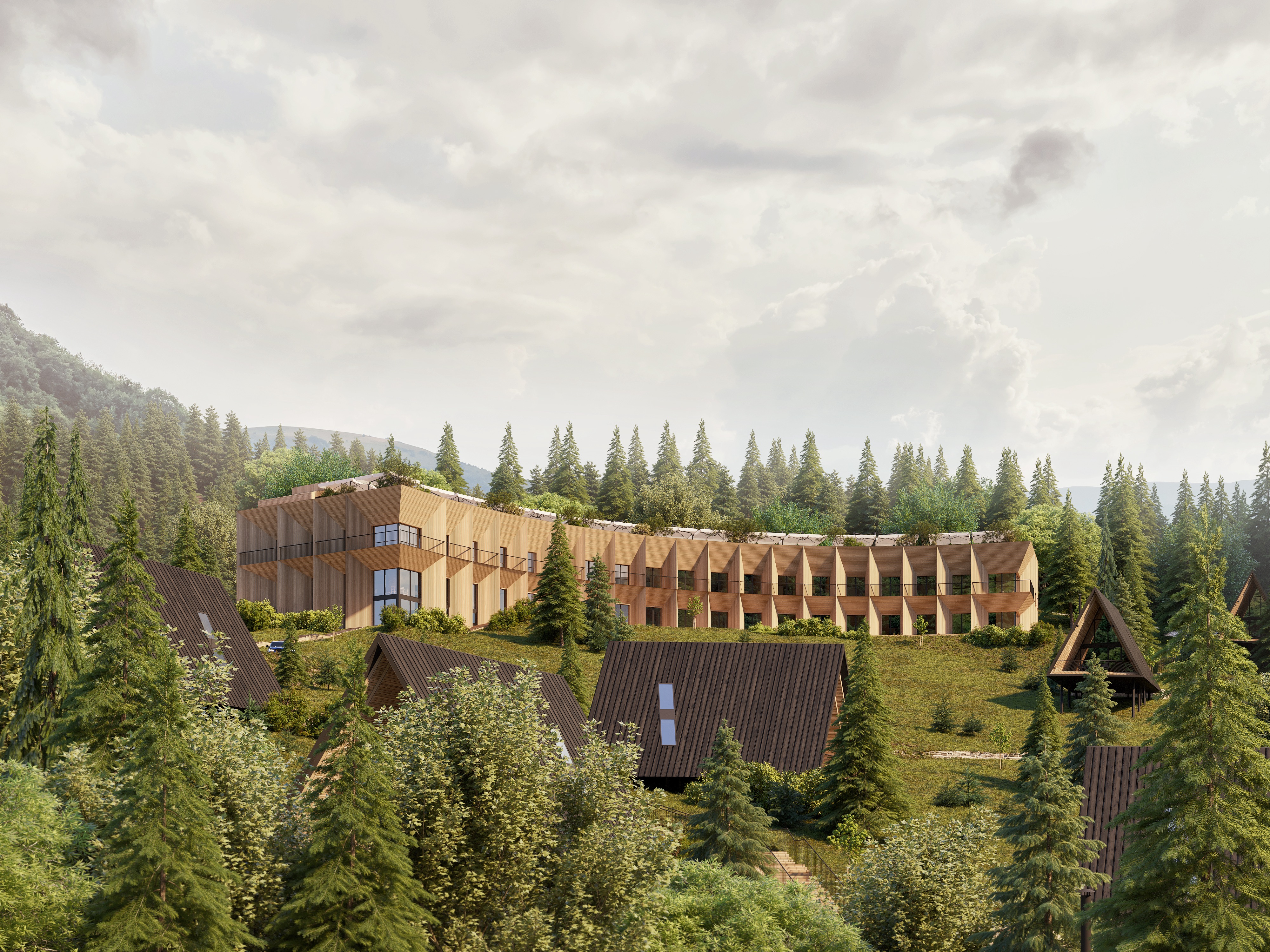
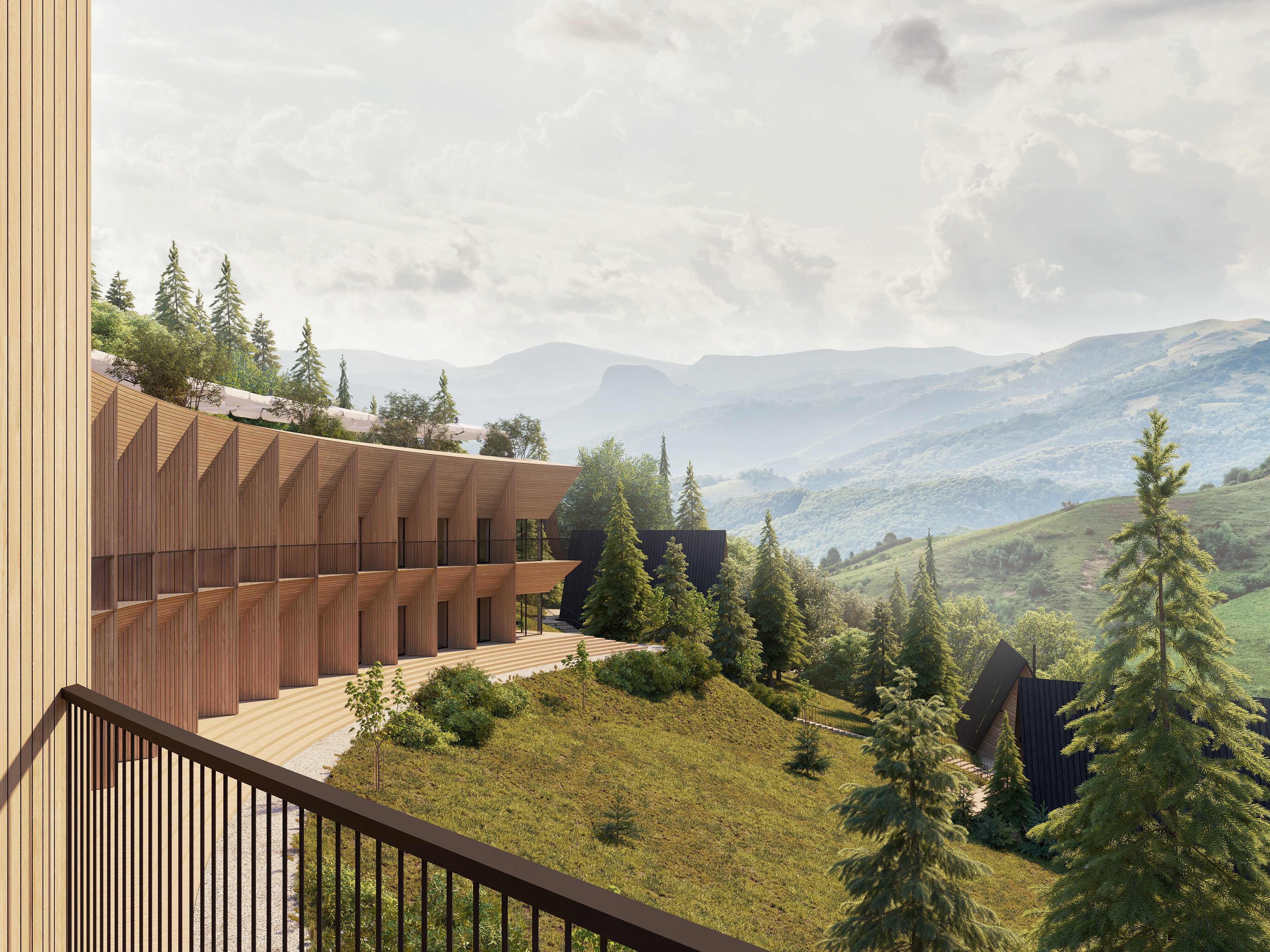
Traditional Carpathian architecture is shaped by dynamic forms and a deep material connection to its landscape and climate. Also, many contemporary hotels adopt standardized layouts and fixed visitor routes, often ignoring the specificity and spatial richness of their context.

Concept

We inverted the classic user circulation in hotels and created a porous hotel where guests enter their rooms directly from the landscape. This gives the project a unique experience and a distinctive character rooted in the local architectural identity.

Involvement

Proactive Design

We engage in proactive design, addressing meaningful challenges to create value for both clients and the broader community.

Example

Urban Recovery Guide

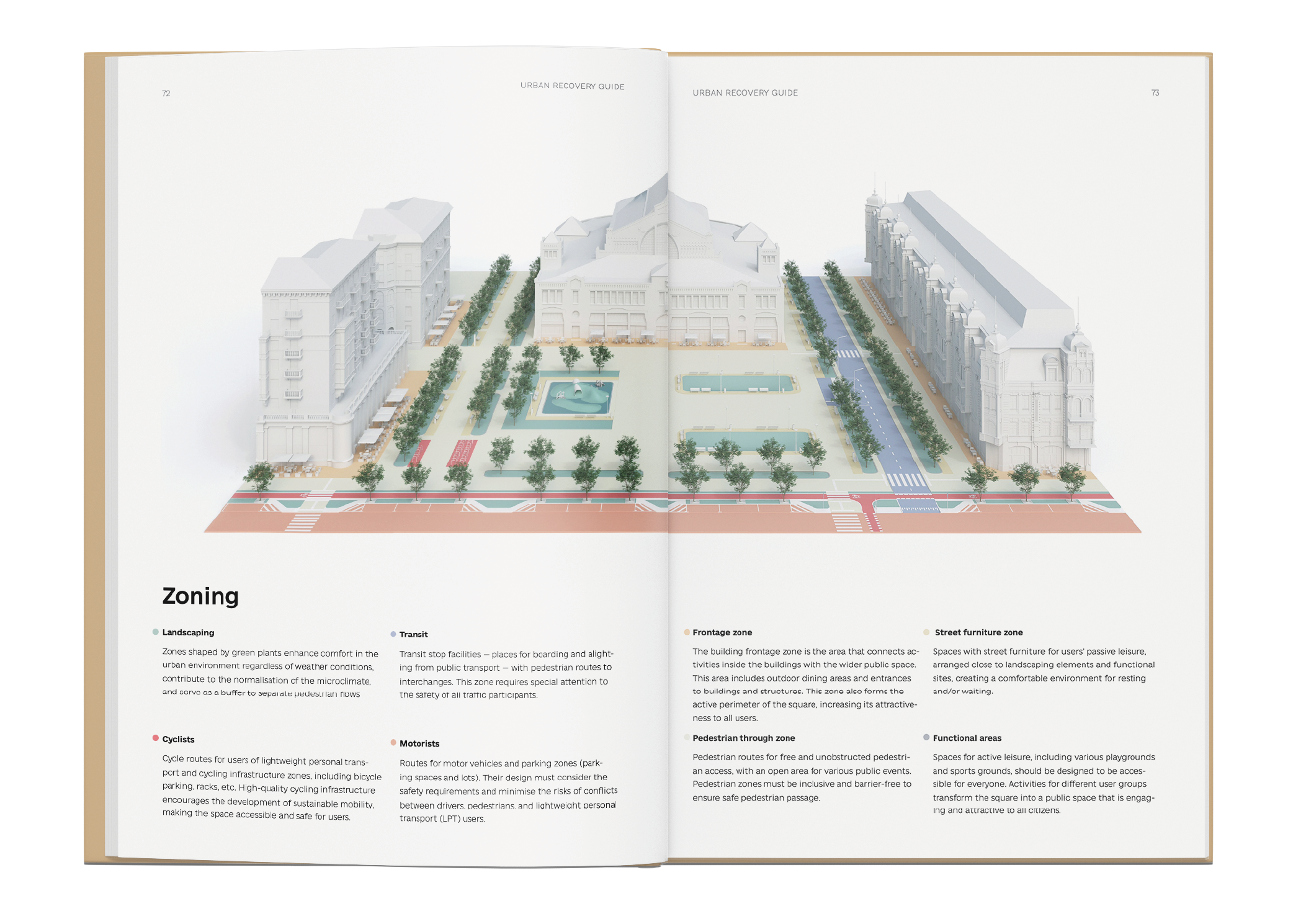
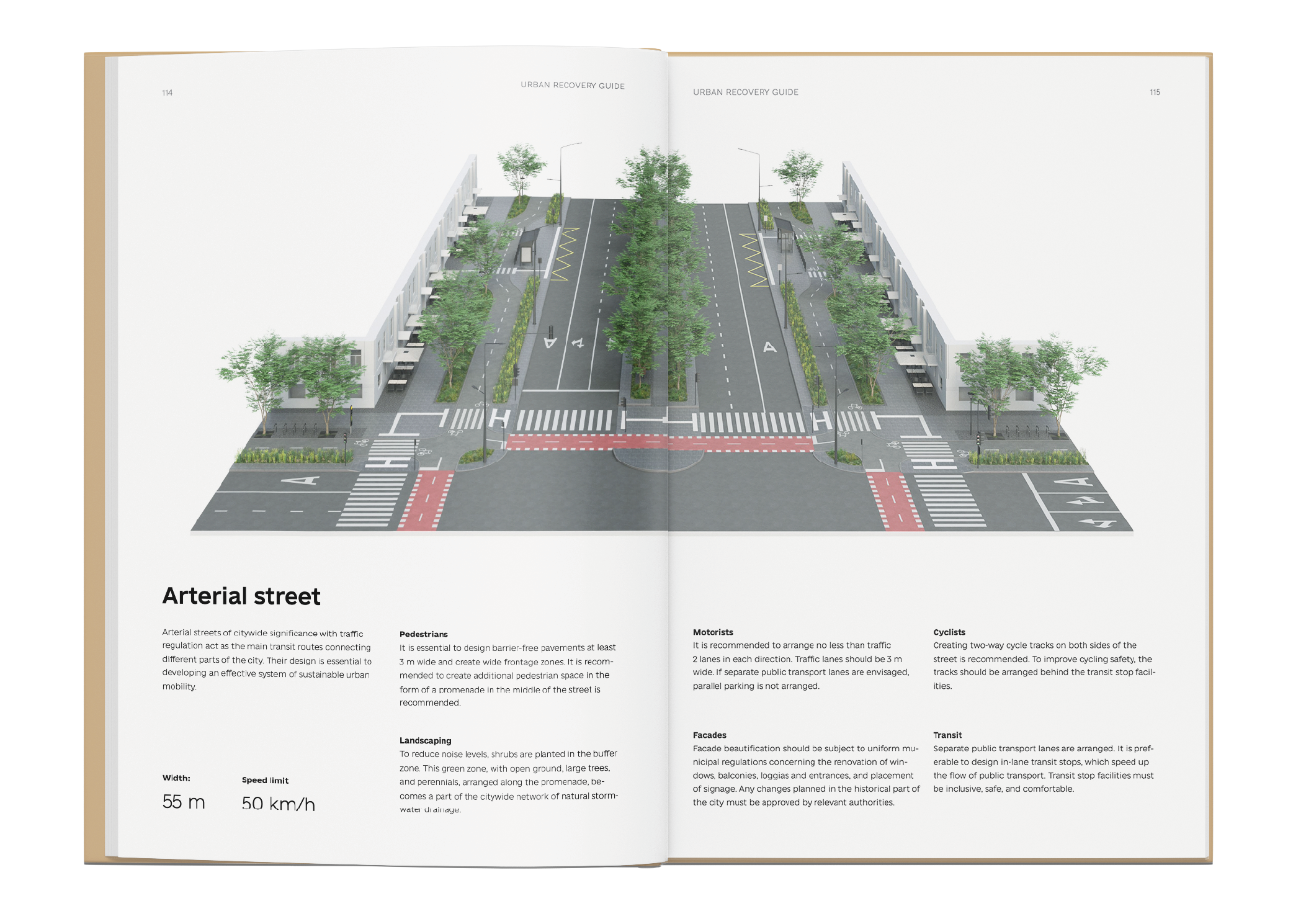
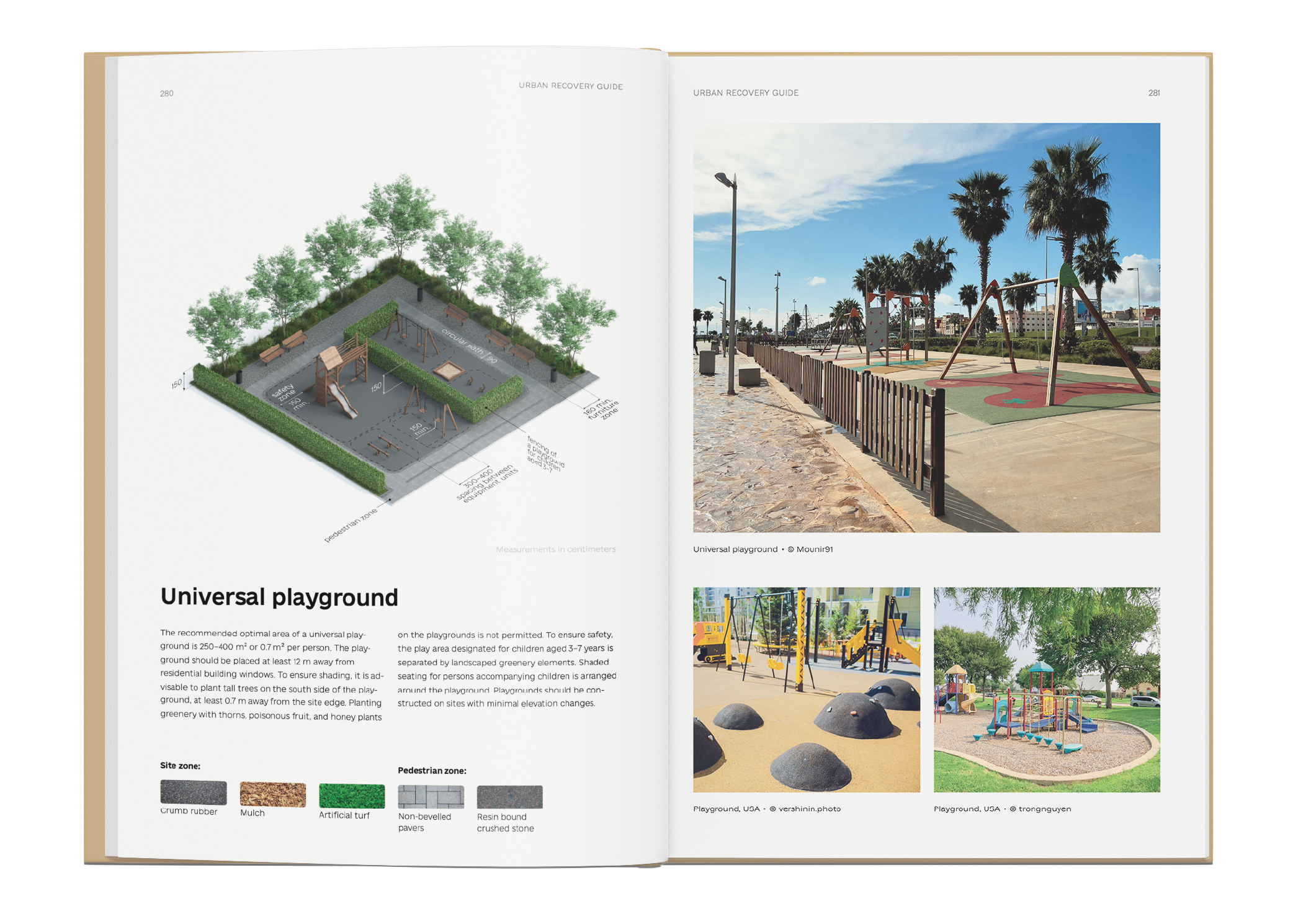
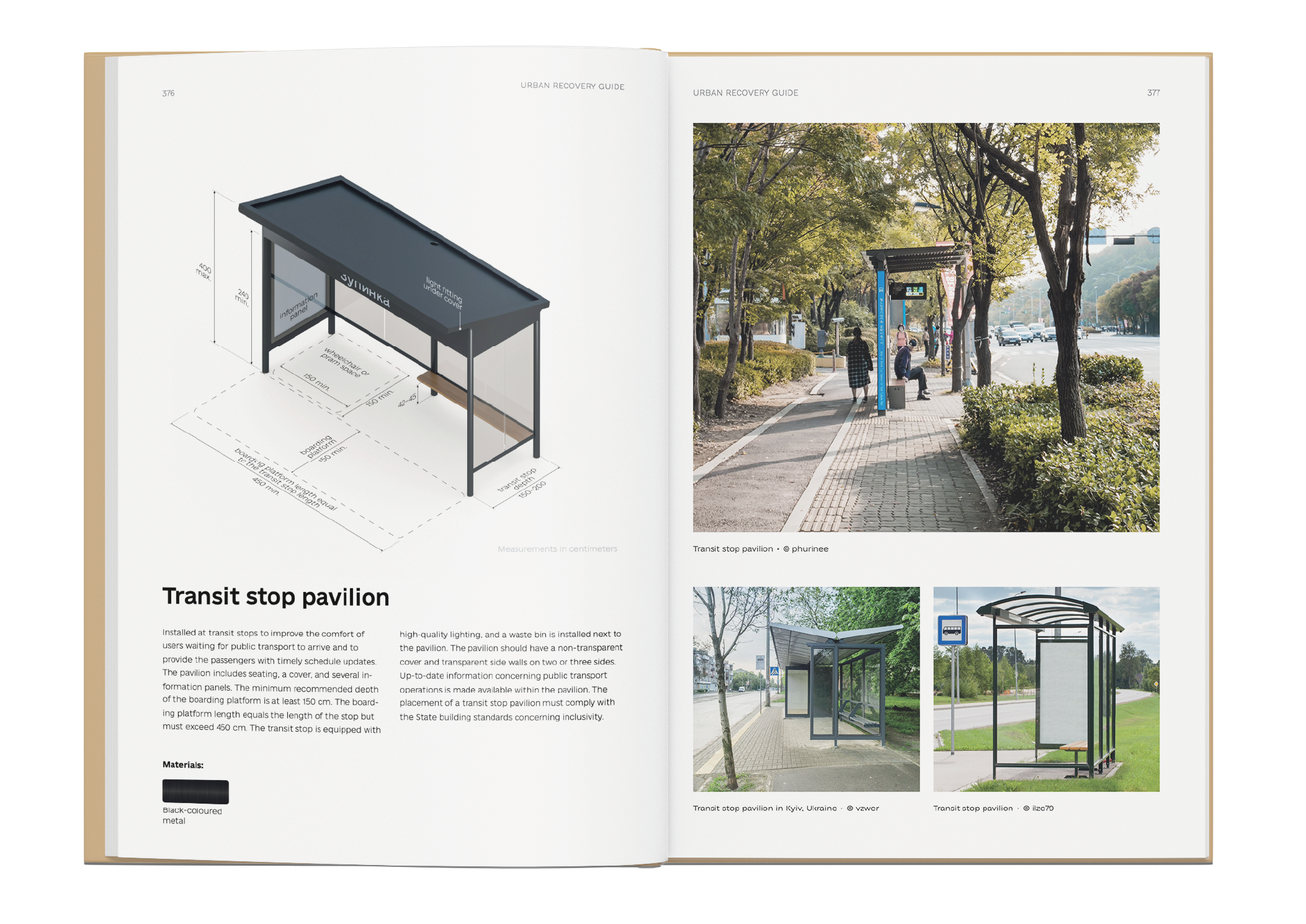
Dozens of our cities and villages were destroyed in Ukraine due to the war unleashed by Russia. Kindergartens, schools, houses, yards, and streets are in ruins. We believe we will rebuild all the destroyed cities and improve them. In order to speed up the course, we have compiled a Urban Recovery Guide. It includes the best global practices for designing and creating comfortable cities. We have collected standard solutions for designing streets, arranging houses, planning yards, and much more.

Urban Recovery Guide

Dozens of our cities and villages were destroyed in Ukraine due to the war unleashed by Russia. Kindergartens, schools, houses, yards, and streets are in ruins. We believe we will rebuild all the destroyed cities and improve them. In order to speed up the course, we have compiled a Urban Recovery Guide. It includes the best global practices for designing and creating comfortable cities. We have collected standard solutions for designing streets, arranging houses, planning yards, and much more.

Urban Recovery Guide

Dozens of our cities and villages were destroyed in Ukraine due to the war unleashed by Russia. Kindergartens, schools, houses, yards, and streets are in ruins. We believe we will rebuild all the destroyed cities and improve them. In order to speed up the course, we have compiled a Urban Recovery Guide. It includes the best global practices for designing and creating comfortable cities. We have collected standard solutions for designing streets, arranging houses, planning yards, and much more.

Urban Recovery Guide

Dozens of our cities and villages were destroyed in Ukraine due to the war unleashed by Russia. Kindergartens, schools, houses, yards, and streets are in ruins. We believe we will rebuild all the destroyed cities and improve them. In order to speed up the course, we have compiled a Urban Recovery Guide. It includes the best global practices for designing and creating comfortable cities. We have collected standard solutions for designing streets, arranging houses, planning yards, and much more.

Contacts

E-mail: nemasliv@gmail.com
Address: Reitarska Vulytsia, 31/16, Kyiv, Ukraine
LinkedInFacebookInstagram

2025
.